At a Glance: Feature Summary
Here's a quick summary of the key features of NSE IX Global Access:
| Feature Parameter | NSE IX Global Access Details |
|---|---|
| Account type | Brokerage account |
| Custody | Through the NSE IX Global Access ecosystem |
| Brokerage | As per NSE IX Global Access's published pricing plan (see fees section below) |
| US stocks | ✓ A curated list of leading large-cap names, currently around 50 — the exact list is subject to change |
| ETFs | ✓ Selected international ETFs listed in the US |
| Fractional Investing | ✓ Enabled via value-based orders |
| Demat Required | Not required during the current rollout |
| Funding Route | Liberalised Remittance Scheme (LRS) |
| Markets | US (current rollout); other markets planned for a future phase (subject to NSE IX roadmap) |
| Derivatives | Not currently supported |
Is NSE IX Global Access right for you?
- Beginner global investors seeking plain equity exposures.
- Investors wanting a simple brokerage account for investing in US stocks through GIFT City.
- Retail participants looking to scale into US stocks using small, regular investments.
- Options and derivatives traders looking for advanced leverage strategies.
- Investors who need access to multiple international markets outside the core US infrastructure.
- Active execution accounts requiring custom order modifications.
What the platform actually is, at a glance
The core components governing retail investment flows break down across these structural milestones:
- Broker — NSE IX Global Access.
- Exchange ecosystem — NSE International Exchange (NSE IX), GIFT City.
- Regulator — IFSCA framework.
- Minimum ticket — No fixed minimum investment amount has been publicly announced; fractional investing allows small-value orders.
- Funding — Via the RBI's LRS framework, capped at $250,000 equivalent per Financial Year.
Is your money safe?
Safety is a primary concern for investors allocating capital abroad. An NSE IX Global Access account is a brokerage account regulated under the International Financial Services Centres Authority (IFSCA) in GIFT City, and your securities are held through the platform's custody arrangements under the applicable GIFT City framework. This is a meaningful structural difference from opening a direct overseas brokerage account with a firm like Interactive Brokers or Charles Schwab, where your holdings sit with the foreign broker itself. Being IFSCA-regulated doesn't remove market, currency, or operational risk — like any investment platform, investors remain exposed to these, and equity values fluctuate based on international stock market movements.
What the live dashboard actually looks like
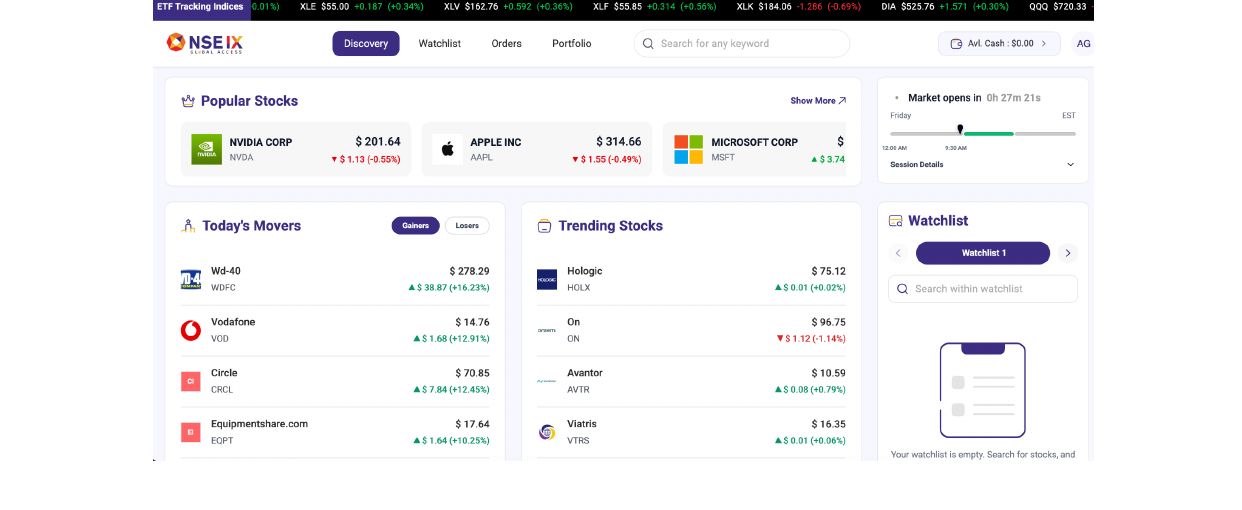
NSE IX Global Access account opening walkthrough
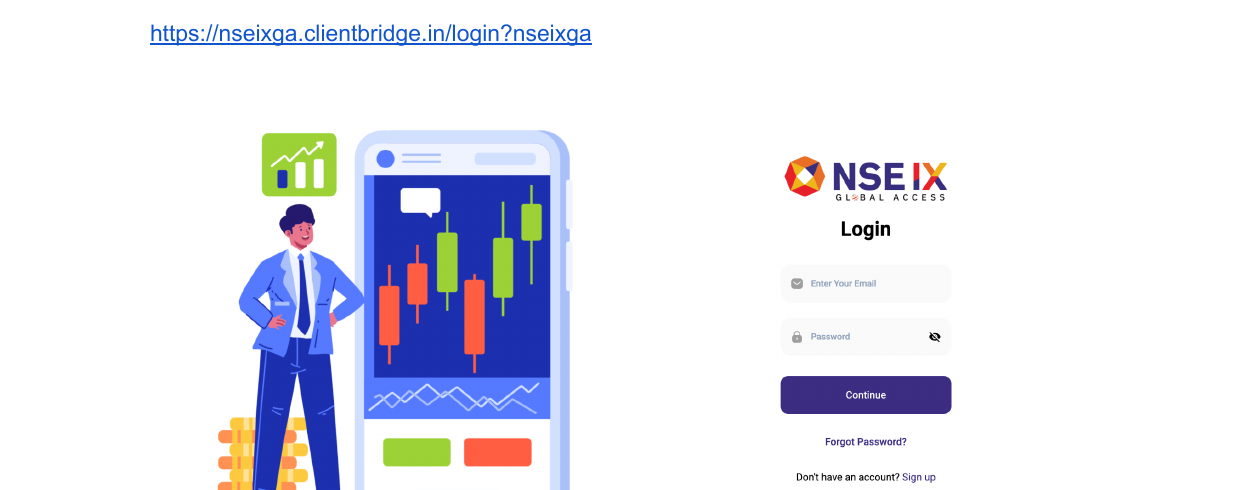
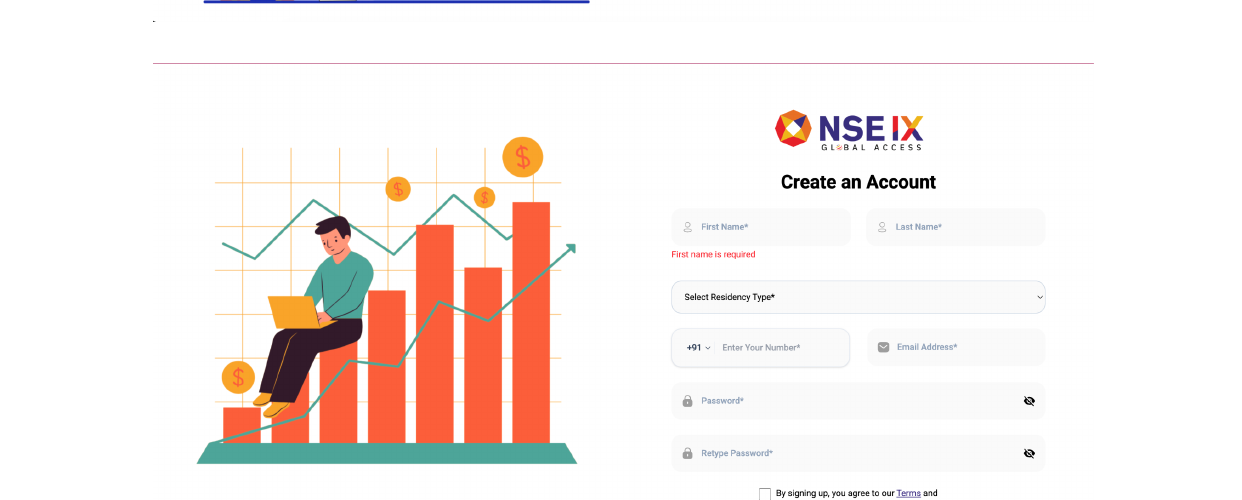
Our walkthrough of the account opening system outlines a fully digitized pipeline that coordinates directly with your personal documentation profiles:
Enter core details including your name, phone number, email address, and specific local residential declarations.
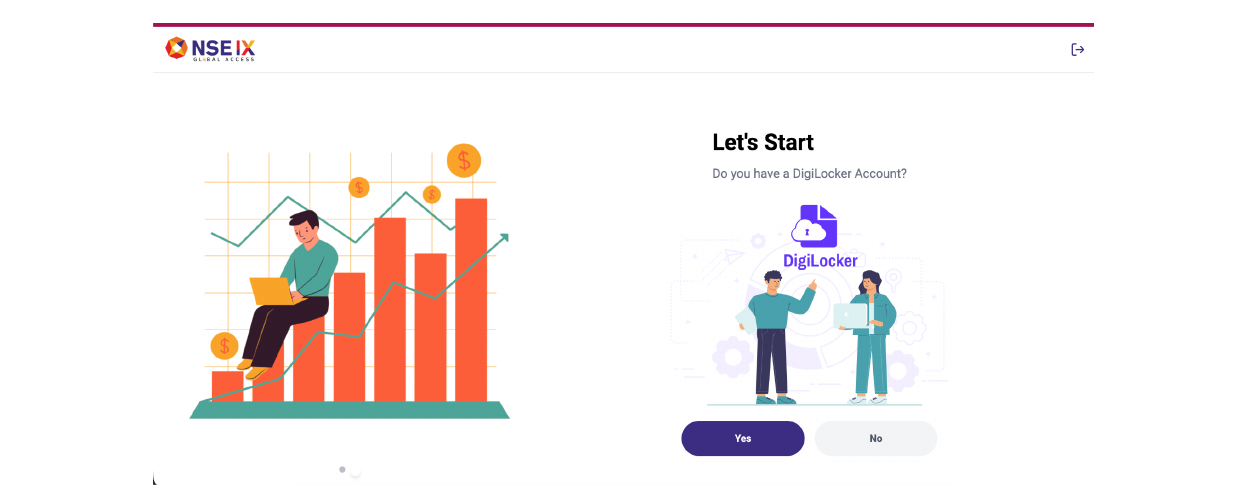
NSE IX Global Access uses DigiLocker to retrieve your PAN and Aadhaar details after your consent. This replaces most of the paperwork involved in account opening, and the verification process usually completes within a minute.
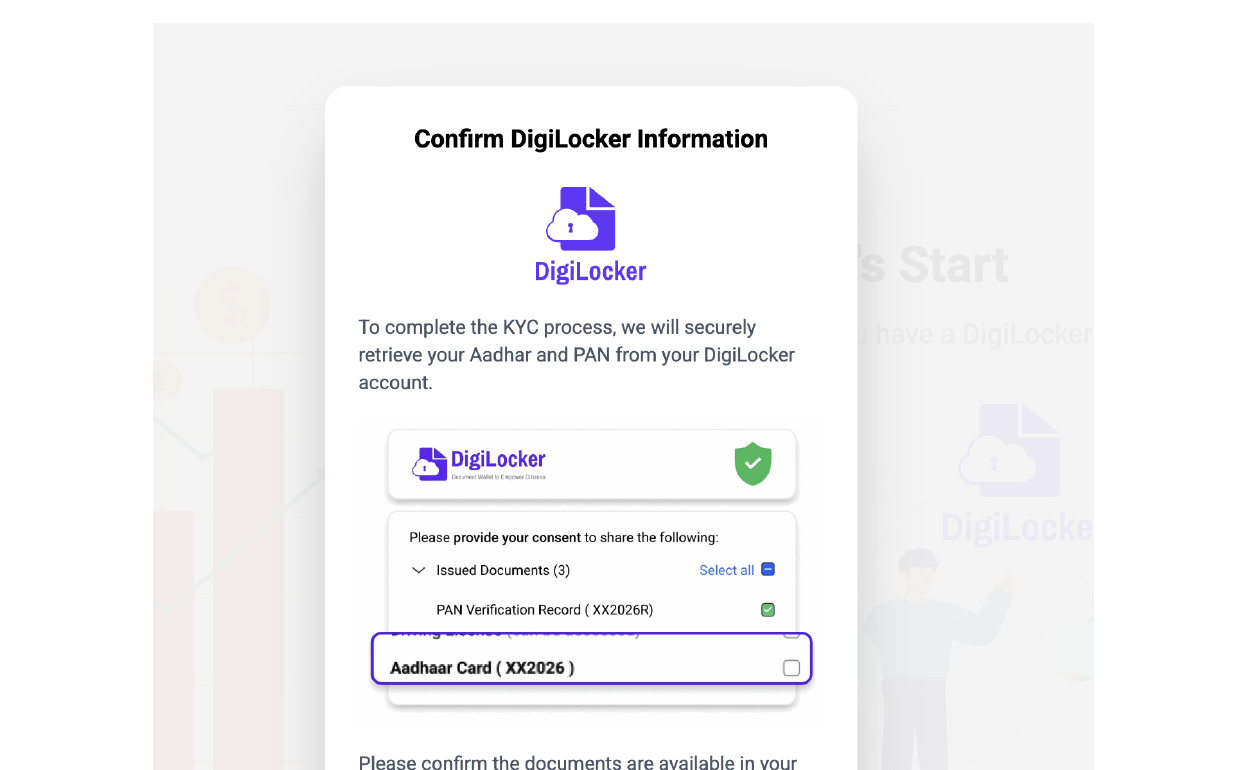
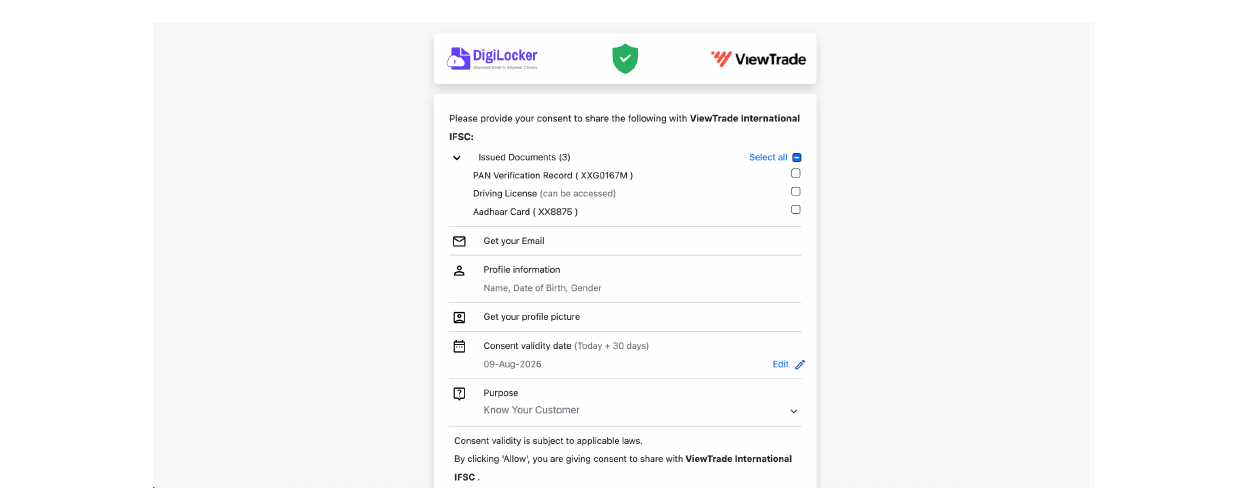
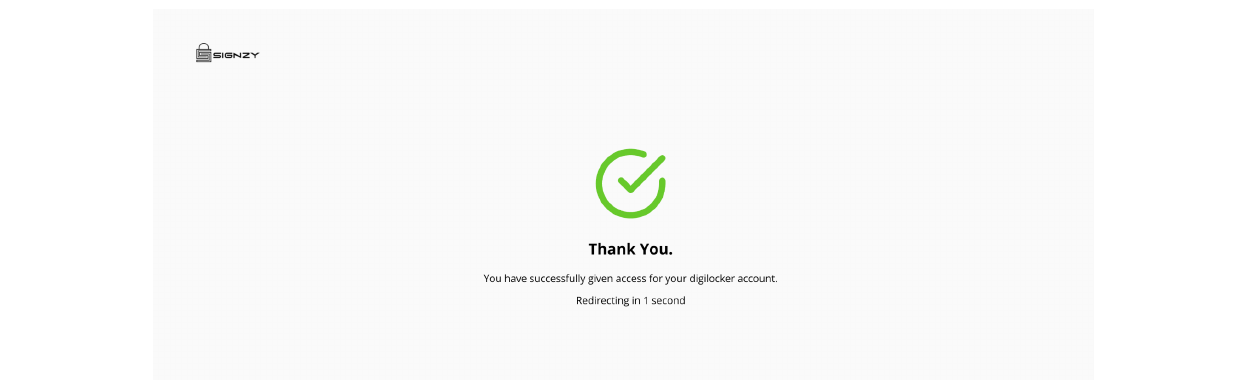
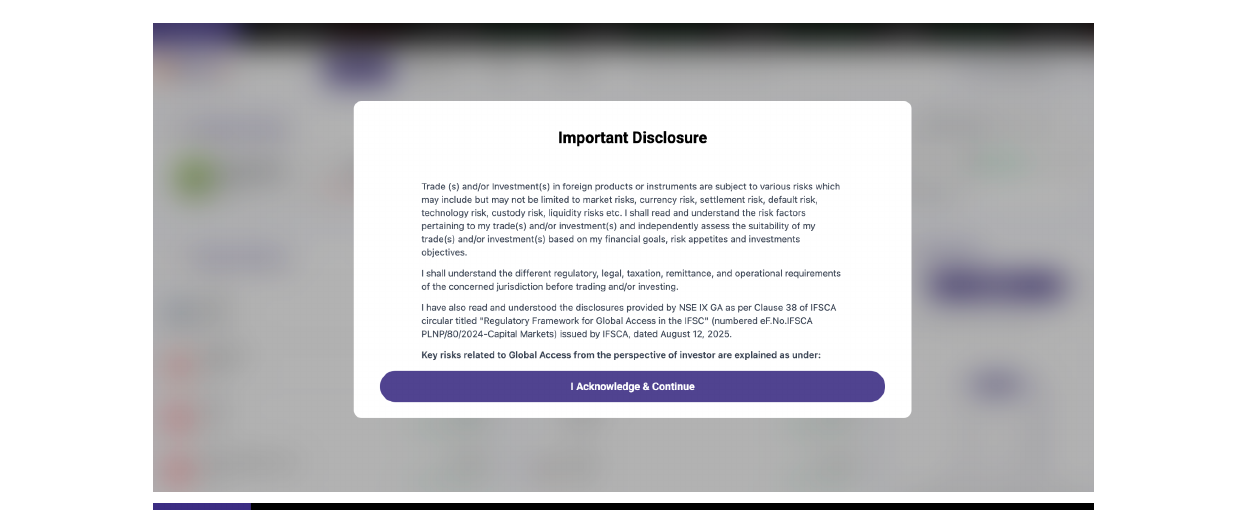
An application number is generated, and you're asked to review terms covering market, settlement, and currency risk before proceeding.
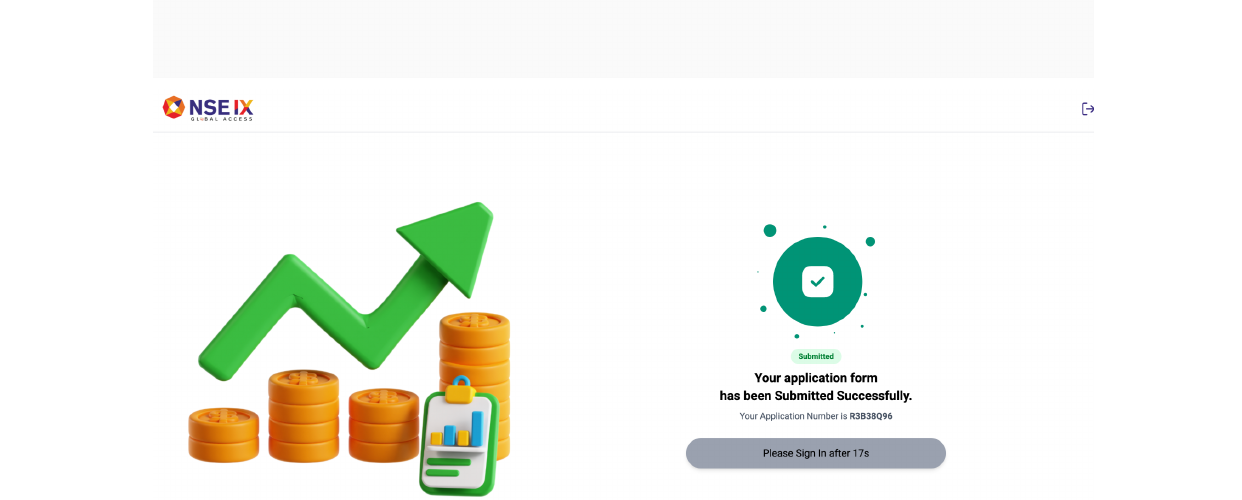
Funds are remitted from your Indian bank account under the Liberalised Remittance Scheme (LRS) and credited in USD before you can start investing.
NSE IX Global Access fees: what you actually pay
NSE IX Global Access publishes its own pricing schedule, split across direct client commission, bank & custody charges, and pass-through regulatory costs. Here's the current published pricing:
| Charge | Current pricing | Remarks |
|---|---|---|
| Direct Client Commission | ||
| Account opening | USD 0 | Free account opening for the global stocks trading account |
| Brokerage (Equity) | 0.25%, subject to a minimum of USD 1 | Charged on the settlement value of the transaction |
| Bank & Custody Charges (Pass Through) | ||
| Custody fees | USD 0 | Charged on monthly assets under management |
| Funding charges | USD 0 till 30 June 2026 | USD 1 per transaction from 1 July 2026 onward |
| Withdrawal (Resident Indians) | USD 0 | No withdrawal charges applied |
| Withdrawal (NRIs) | USD 10 | Charged per withdrawal request processed |
| Misc. event fees | Varies (pass through) | Applies to client-initiated events such as securities/fund movements, voluntary corporate actions, tax filings, paper confirmations and statements |
| Direct Costs Applicable (Pass Through) | ||
| FINRA Trading Activity Fee | USD 0.000195 | Multiplied by sell quantity |
| IGST (Indian residents only) | 18% | Calculated on brokerage value |
| IFSCA turnover fee | USD 0.00005 | Multiplied by trade volume |
| SEC fees | USD 0.0000206 | Charged on sell order value |
| FX conversion | Charged by the remitting bank / funding partner | Not published by NSE IX Global Access itself — usually one of the biggest costs |
Your total cost isn't just brokerage. Besides brokerage, investors should account for regulatory pass-through charges (FINRA Trading Activity Fee, IFSCA turnover fee, SEC fees), 18% IGST on brokerage for Indian residents, bank remittance charges and foreign exchange spreads. For long-term investors, FX conversion costs often have a larger impact than trading commissions.
One structural advantage carries across this route: trades clearing through GIFT City bypass domestic Securities Transaction Tax (STT) and local stamp duty, since these are IFSCA-regulated transactions outside India's domestic securities framework. Account opening and custody are both free, and funding is free until 30 June 2026 (USD 1 per transaction thereafter) — so FX conversion charges on the way in and out remain the biggest variable cost. It's worth checking the current FX spread before funding your account. Fee schedules on soft-launch platforms can change — verify current numbers directly with NSE IX Global Access before transacting. For how this compares against other GIFT City brokers, see our Dhan platform profile.
NSE IX Global Access vs Interactive Brokers, Charles Schwab and other international brokers
Better for: investors who want a simple, India-regulated brokerage account for plain US stock exposure, with fast digital onboarding and no separate offshore account to manage.
Less suitable for: investors who want access to a wide range of global markets, order types, or research tools beyond a curated US stock list.
| Dimension | NSE IX Global Access | International brokers (IBKR, Schwab, etc.) |
|---|---|---|
| Account opening | Fully digital, DigiLocker-based KYC, typically completes in minutes | Offshore paperwork, longer verification cycles |
| Market access | Curated US stock and ETF list (current rollout); more markets planned | Broad access across US and often other global exchanges |
| Brokerage | 0.25% of trade value, USD 1 minimum, on settlement value (default plan). Account opening and custody are free. | Varies by broker and plan; often lower per-share for high-volume traders |
| Funding | Via LRS remittance, integrated funding routes with supported banks | Via LRS remittance, wire transfer or broker-specific funding partners |
| Supported order types | Market and limit orders on a curated stock list; fractional value-based orders | Full range of order types (market, limit, stop, trailing stop, etc.) across a broader universe |
| Stock universe | Curated list of leading US large-caps and select ETFs (current rollout) | Thousands of US-listed stocks, ETFs and often other global markets |
| Currency conversion | Handled by the remitting bank / funding partner under LRS | Varies — some brokers offer competitive in-house FX conversion |
| Ease of use | Simple, curated interface for plain equity investing | More complex, feature-rich platforms suited to active traders |
| Regulatory framework | IFSCA (India), operating from GIFT City | Regulated overseas (e.g. SEC/FINRA for US brokers) |
The LRS framework and funding operations
Funding routes through the RBI's Liberalised Remittance Scheme, and counts towards your overall annual LRS limit of USD 250,000 alongside any other eligible overseas remittances you make in the financial year.
Outbound remittances are subject to prevailing tax rules, including Tax Collected at Source (TCS) provisions. Holdings acquired this way may also trigger foreign asset reporting obligations depending on your tax residency — our Schedule FA guide walks through what needs to be declared and when.
Pros and Cons
- Direct supervision under the exchange framework within the IFSCA zone.
- No separate GIFT City demat account needed to get started.
- Fully digital onboarding using DigiLocker.
- Supports fractional investing through value-based orders.
- NSE IX has indicated future expansion to additional international markets.
- Stock and ETF selection is curated and narrower than a full-service international broker.
- Derivatives aren't currently supported.
- Brokerage is competitive, but investors should also factor in FX conversion costs and regulatory pass-through charges when comparing total cost.
- Trading follows US market hours — late evening and overnight for Indian investors.
Frequently Asked Questions
Do I need a dedicated GIFT City demat account to participate?
A separate CDSL IFSC demat account is not required during the current rollout.
What are the minimum transaction thresholds?
No fixed minimum investment amount has been publicly announced. Fractional investing allows small-value orders, subject to broker limits.
Are these channels open to Non-Resident Indians (NRIs)?
Availability for NRIs depends on applicable regulations and individual geographic tax designations — check current eligibility directly with NSE IX Global Access before applying.
When will the platform feature broader global asset selections?
NSE IX has announced plans to expand to additional international markets, although no official launch timeline has been published.
Does NSE IX Global Access charge annual maintenance fees?
The default plan carries no subscription/monthly fee, though other pricing plans may have different terms — check the current schedule before choosing a plan.
What brokerage does NSE IX Global Access charge?
Under the default plan, brokerage is 0.25%, subject to a minimum of USD 1, charged on the settlement value of the transaction. Account opening and custody are free. Regulatory pass-through charges (FINRA Trading Activity Fee, IFSCA turnover fee, SEC fees) and 18% IGST on brokerage (for Indian residents) apply separately, along with FX conversion costs.
Can I transfer my holdings later?
This depends on NSE IX Global Access's current transfer policies, which can change during the soft-launch phase — verify directly with the platform before assuming your holdings are portable.
Are dividends credited automatically?
Dividends on US holdings are typically credited to your linked account, subject to applicable US withholding tax and platform processing timelines.
How are corporate actions handled?
Corporate actions on underlying US securities (splits, mergers, spin-offs) are processed through the custody arrangement and reflected in your account — specifics can vary by event type, so check with NSE IX Global Access for any pending action affecting your holdings.